Have you ever wondered how someone with little or no credit history qualifies for a mortgage?
Believe it or not, there was a time when almost every mortgage was underwritten without the automated credit scoring systems we use today.
A Look Back at Mortgage Lending in the 1990s
When I entered the mortgage industry in 1993, things looked very different.
There were no automated underwriting systems like Desktop Underwriter (DU) or Loan Product Advisor (LP). FICO scores were not the driving force behind mortgage approvals the way they are today.
We worked from fax machines, escrow instructions were typed from templates, and many loan payments were calculated using Hewlett-Packard Financial Calculators.
Underwriting relied heavily on a traditional checks-and-balances approach.
Underwriters literally evaluated the strengths and weaknesses of each file, weighing positive factors against negative factors before making a lending decision.
One major consideration was the number of positive trade lines versus negative trade lines on a consumer’s credit report. The more established, well-paid accounts a borrower had, the stronger the overall credit profile.
What Happened If You Had No Credit?
Years ago, having no credit history often meant you simply couldn’t qualify for a mortgage.
Today, establishing credit is much easier, but it still takes planning and patience.
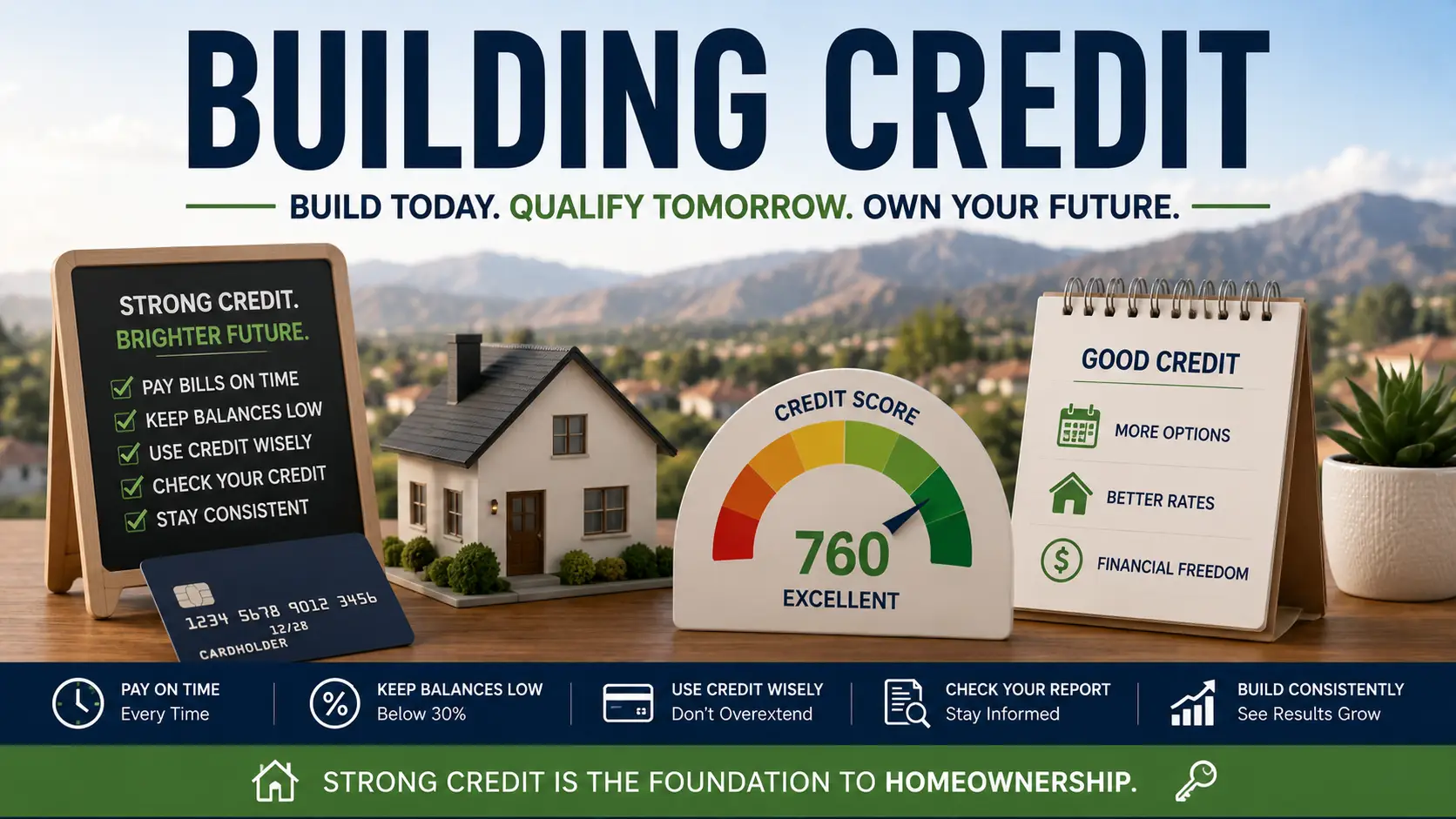
How to Build Credit
If you’re starting from scratch, consider these steps:
- Open a secured credit card or two.
- Obtain one or two small credit cards or installment accounts.
- Establish a gas card if available.
- Work toward obtaining at least one account with a credit limit of $2,500 or more.
- Become an authorized user on a well-managed account, when appropriate and be careful because this account can impact your debt ratio.
- Never make a late payment.
- Keep credit card balances low to maintain healthy debt utilization.
For mortgage purposes, a good goal is to establish three active trade lines, with at least one account having a higher credit limit. This often helps borrowers “score out.” Footnote, these are just suggestions, are not exact, and each consumer’s success differs.
What Does “Scoring Out” Mean?
Scoring out simply means the credit reporting agencies have enough information to calculate a valid credit score.
Without sufficient credit history, the credit bureaus may return “No Score” or an insufficient credit file, requiring lenders to evaluate the borrower differently.
What Is a Manual Underwrite?
A manual underwrite is exactly what it sounds like.
Instead of relying primarily on an automated approval through DU or LP, an experienced underwriter personally reviews the entire loan file using published underwriting guidelines.
In many ways, manual underwriting resembles how mortgages were approved decades ago.
Although less common today, FHA still permits manual underwriting under certain circumstances, including borrowers with limited or no traditional credit history.
Manual Underwrite vs. Automated Approval
Manual underwriting generally comes with stricter requirements than an automated approval. These can be offered thru VA, FHA, Fannie Mae, and Freddie Mac – assuming you score-out or have FICO Scores. Sometimes you are forced to manual downgrade or in other instances, mistakes on the credit report or extenuating circumstances can lead to manual downgrades or the need for manual underwriting.
Borrowers may encounter:
- Lower allowable debt-to-income ratios.
- More conservative credit standards.
- Reserve asset requirements.
- Review of payment shock, comparing the proposed mortgage payment to the borrower’s current housing payment.
- Homebuyer education or counseling requirements in some cases.
- Possible interest rate adjustments, depending on the lender and loan program.
Because the underwriter assumes greater responsibility for the approval decision, documentation requirements are often more detailed.
Alternative Credit for FHA
One of FHA’s unique advantages is the ability to use alternative credit references when a borrower lacks sufficient traditional credit. Typically, in the instance where we run credit and the response comes back FICO N/A or unavailable.
Typically, lenders look for three documented credit references with a strong payment history.
Examples include:
- Rent payments
- Auto insurance
- Cell phone bills
- Utility bills
- Other recurring obligations that demonstrate responsible payment habits
For example, a borrower may qualify for an FHA manual alternative credit underwrite with:
- One $500 credit card paid as agreed,
- Twenty-four months of verified rent payments, and
- Twenty-four months of on-time cell phone payments.
When properly documented, these alternative credit sources may satisfy FHA’s manual underwriting requirements.
Final Thoughts
While most mortgage approvals today are generated through automated underwriting systems like DU and LP, manual underwriting remains an important option for borrowers who have little or no traditional credit history.
If you’re just beginning to build credit, focus on establishing multiple trade lines, maintaining perfect payment history, and keeping balances low. And if you haven’t yet developed a FICO score, don’t assume homeownership is out of reach. FHA’s manual underwriting process continues to provide a path to homeownership for qualified borrowers throughout the Temecula Valley who can demonstrate responsible financial habits—even without a traditional credit profile.