
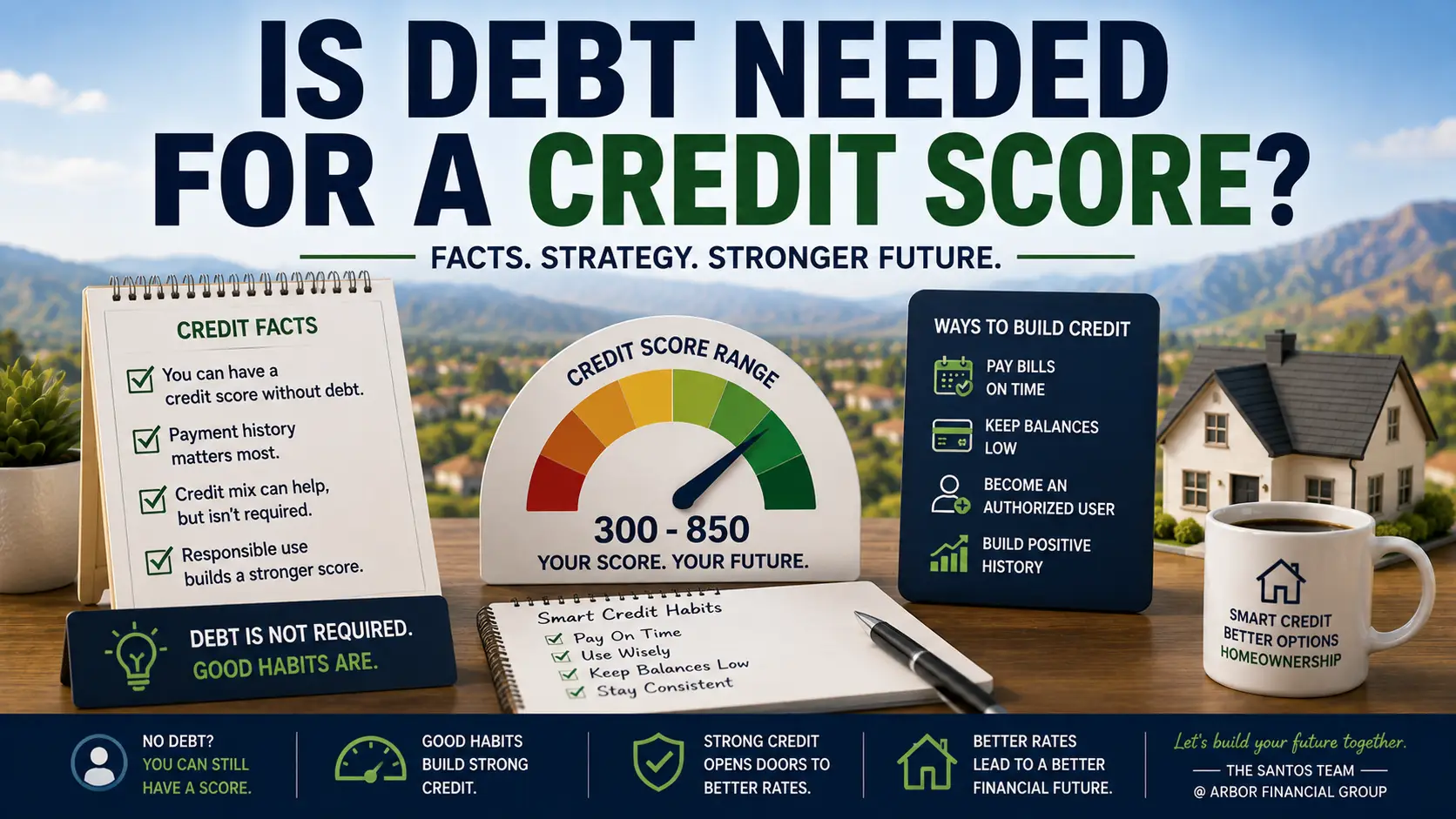
One of the most common questions I hear is:
“Why do I need credit to obtain credit?”
It’s a fair question, and in many ways, it feels backwards.
Today’s mortgage world depends heavily on historical credit data. If you’ve never borrowed money or have very little documented credit history, qualifying for a mortgage can actually be more difficult than someone who has responsibly used credit for years.
Let’s look at how we got here and are we primed to constantly be in debt to play in today’s system?
A Brief History of Credit
Credit reporting has been around for well over a century, but the modern mortgage industry didn’t always revolve around credit scores.
When I entered the mortgage business in 1993, we didn’t have the automated underwriting systems we rely on today. We worked off fax machines, escrow instructions were typed from templates, and mortgage payments were calculated on Hewlett-Packard Financial Calculators.
Underwriters evaluated borrowers using a traditional checks-and-balances approach.
They reviewed the positives and negatives of every file, including:
- Payment history
- Employment stability
- Savings
- Debt
- Number of positive trade lines
- Number of negative trade lines
Today, most mortgage approvals begin with automated underwriting systems using FICO® Scores, and newer models such as VantageScore® are gradually being introduced into the mortgage marketplace.
These scoring models generally require enough historical credit information to generate a reliable score.
Is the System Backwards?
Let’s consider two borrowers.
Borrower A
- Paid cash for everything for 40 years.
- Lives within their means.
- Owns their vehicles free and clear.
- Owns their home free and clear.
- Has no debt.
- Has no FICO score.
Growing up, many people would have considered this the ideal borrower.
Ironically, in today’s mortgage environment, this borrower may have a difficult time obtaining financing because there isn’t enough documented credit history for automated underwriting to evaluate.
Generations Have Changed
Many of our grandparents simply didn’t trust banks. My grandparents on my mother’s-side lived thru World War I, 1929 stock market crash, The Great Depression, World War II, Korean War, Vietnam War, and coming off gold standard in 1971 – do you blame them?
They paid cash, avoided debt, and believed owing nothing was financial freedom.
Our parents’ generation often found a middle ground—using credit responsibly while paying balances down quickly.
Today, however, the lending system largely rewards borrowers who establish and maintain responsible credit histories.
Simply put:
Today, you generally need credit to obtain additional credit.
The Era of Leverage
Many well-known real estate investors, including Grant Cardone and Robert Kiyosaki, frequently discuss the value of leverage—using borrowed money against appreciating assets rather than allowing wealth to remain tied up in debt-free property.
Whether someone agrees with that philosophy or not, the modern financial system has increasingly embraced leverage through products such as:
- Promotional financing
- Buy Now, Pay Later programs
- Vehicle leases
- Extended auto loans
- Home equity borrowing
- Low-interest financing offers
- 50 year and interest only mortgages
Rather than viewing a debt-free asset as the end goal, many investors see it as capital that can potentially be put to work elsewhere. We can discuss leverage in later blog articles, but this gives you a quick understanding.
When Having Little or No Credit Becomes a Problem
Mortgage qualification can become more difficult when borrowers have:
- No FICO score.
- Very limited credit history.
- Too few established trade lines.
- Paid every account off and closed them.
- No revolving credit history.
- Insufficient high-limit accounts.
For many mortgage programs, borrowers often benefit from having three active trade lines, with at least one account showing a credit limit of approximately $2,500 or greater. This frequently helps borrowers “score out” by generating a reliable mortgage credit score.
The Credit Paradox
One of the biggest surprises for consumers is that some financial decisions that seem responsible can unintentionally reduce a credit score.
Examples include:
- Closing long-established credit card accounts.
- Eliminating all revolving credit.
- Losing payment history because accounts are closed.
- Paying cash for everything without establishing any documented credit history.
That doesn’t mean paying debt off is a bad financial decision. Rather, it highlights that credit scores measure credit usage and repayment history—not overall wealth or financial discipline.
Final Thoughts
In some respects, today’s credit system does feel backwards. Someone who has lived debt-free for decades may find it harder to qualify for a mortgage than someone who has responsibly managed credit over many years.
The key takeaway isn’t that you should carry unnecessary debt. It’s that if you anticipate buying a home in the future, maintaining a healthy, well-managed credit profile is often just as important as paying bills on time. Understanding how today’s scoring models work can help you prepare long before you apply for a mortgage in the Temecula Valley.